Advanced Technology Discussion

In-Depth Guide: The Complete Manufacturing Process of Plastic Packaging Bags
Industrial Manufacturing & Engineering

In-Depth Guide: The Complete Manufacturing Process of Plastic Packaging Bags

📅 Date: October 2026 ⏱️ Read Time: 6 min
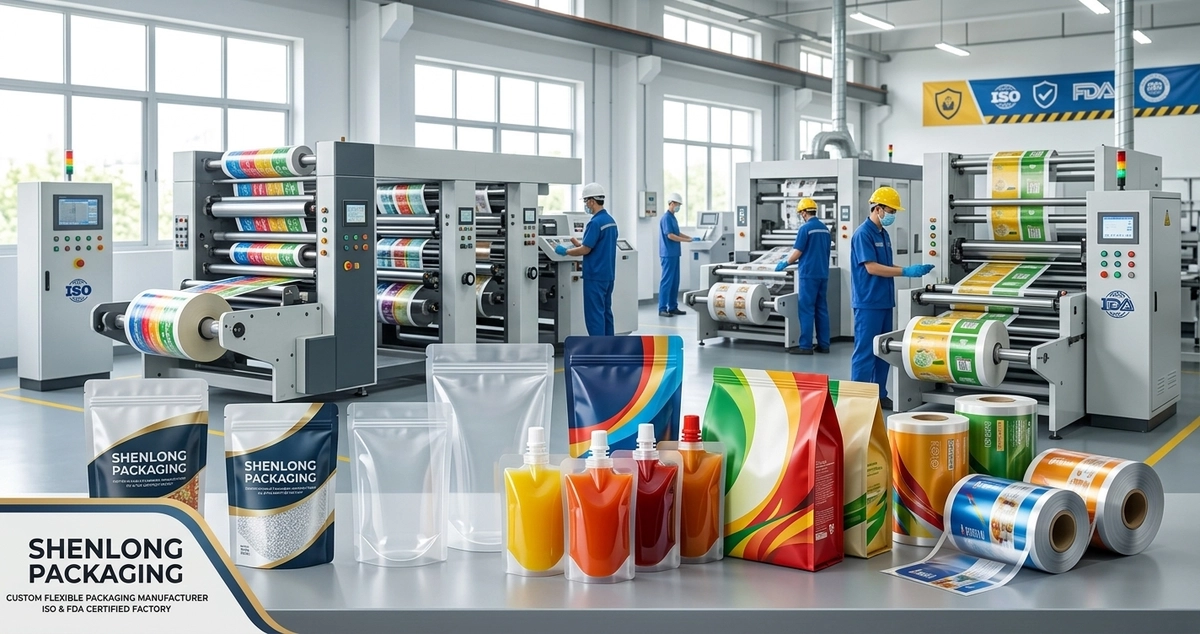
Plastic packaging bags are extensively used across food, apparel, personal care, and e-commerce industries. While seemingly lightweight and simple, every single bag undergoes a multi-stage, high-precision engineering process—from raw resin melting to printing, laminating, and cutting. Here is a comprehensive walkthrough of the end-to-end manufacturing process.

1. Core Workflow of Plastic Packaging Production

1 Film Extrusion 2 Printing 3 Lamination 4 Cutting & Sealing 5 QC & Packing
Figure 1: Standard Manufacturing Process Flowchart
1
Blow Molding (Film Extrusion)

Blow molding converts raw plastic resin granules (such as PE, PP, or PVC) into thin films. Dried raw materials are fed into the extruder, melted at high temperatures, extruded through a circular die, blown into a tubular bubble, cooled, and wound into film rolls.

Resin Hopper Heating Extruder Plastic Film Roll
Figure 2: Principle of Film Blow Molding
  • Common Materials: LDPE (Low-Density Polyethylene), HDPE (High-Density Polyethylene), PP (Polypropylene).
  • Key Control Points: Blow-up ratio (determines uniform thickness), cooling air ring volume, and temperature control.
2
Printing

After receiving a corona surface treatment to increase surface tension, the film enters the printing machinery. The two dominant industrial printing technologies are Gravure Printing and Flexographic Printing.

  • Gravure Printing: Ideal for high-volume, premium color reproduction (e.g., food pouch packaging). Uses engraved metal cylinders to produce vibrant, precise prints.
  • Flexographic Printing: Uses flexible photopolymer plates and eco-friendly water-based inks, commonly applied to supermarket carrier bags and mailer bags.
3
Lamination (Multi-layer Pouches)

A single film layer rarely satisfies all requirements for oxygen barrier, light shielding, puncture resistance, and heat sealing. Lamination bonds multiple materials with distinct properties (e.g., PET + AL Aluminum Foil + PE) into a unified structure.

  • Solventless Lamination: Uses solvent-free adhesives with zero toxic residue, making it ideal for food and pharmaceutical packaging.
  • Dry Lamination: Applies solvent-based adhesives, passes through a drying tunnel, and uses heat rollers to bind layers with high bond strength.
4
Slitting and Bag Making

The printed or laminated film rolls are loaded onto automatic bag-making machines. They undergo heat sealing and precise cutting based on bag styles (e.g., 3-side seal, center seal, stand-up pouch, or handle bags).

Film Feeding Heat Sealer Cutter Finished Bags
Figure 3: Heat-Sealing & Cutting Bag-Making Process

💡 Eco-Friendly Trend: Biodegradable Packaging

Driven by global sustainability policies, biodegradable materials like PLA (Polylactic Acid) and PBAT are rapidly replacing traditional PE. While processing steps align closely with conventional film extrusion, biodegradable resins require strict control over lower extrusion temperatures and environmental humidity during storage.

© 2026 Packaging Engineering & Tech Blog | Professional Insights & Innovation

Leave a Reply

Your email address will not be published. Required fields are marked *